
Welcome to the first edition of the Dial A Tire Q&A — straight answers to the tire questions Halifax drivers ask us most. No jargon, no upsell, just what our techs would tell you over the counter.
Is it bad to drive on winter tires in summer?
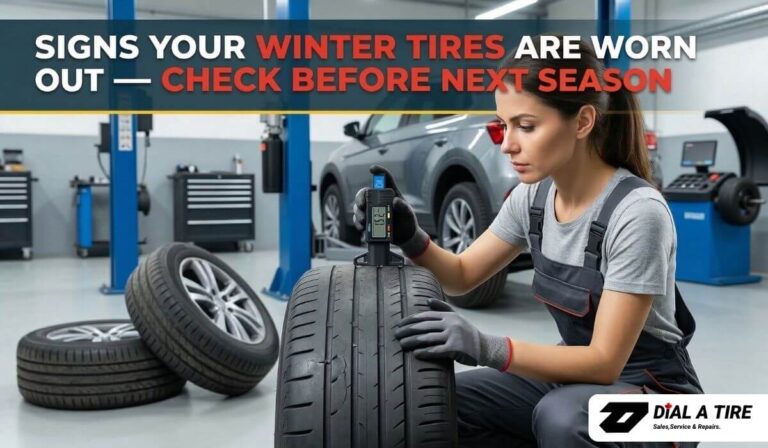
Yes — winter tires in summer wear out faster, brake longer, and cost you more in the long run. If your winters are still on in June, it’s time to book a changeover.
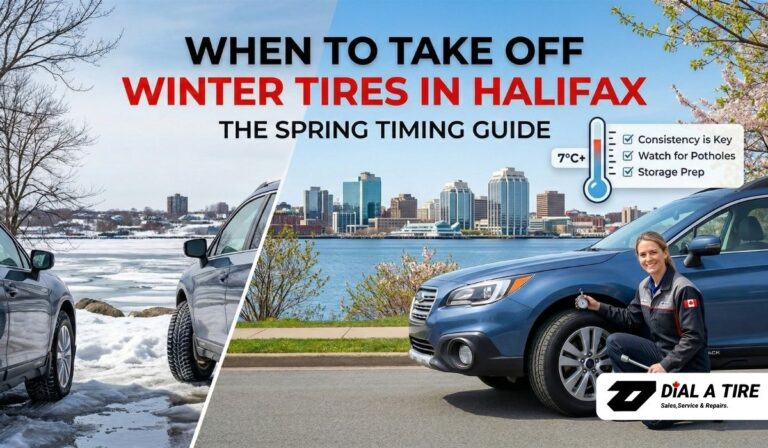
Winter rubber is engineered to stay soft in the cold. In summer heat, that soft compound wears down quickly — driving on winter tires through a Halifax summer can burn through a season or more of their life. They also flex more on warm pavement, which means longer braking distances, mushier handling, and slightly worse fuel economy. You paid good money for those winters; don’t spend their tread on sunny pavement. Our team can swap them over in well under an hour — see our tire change service in Halifax, and if you’re not sure whether it’s too late in the season to bother, here’s our guide on when to take off winter tires in Halifax.
Can I replace just one tire, or do I need two or four?
It depends on how worn your other tires are — and what you drive. If the remaining three tires are nearly new, a single matching replacement can be fine. If they’re half-worn or more, replace in pairs (both on the same axle). Many all-wheel-drive vehicles need all four replaced together.
Mismatched tread depths make tires rotate at slightly different speeds. On an AWD vehicle, that difference can strain the drivetrain — a much more expensive fix than a tire. A good shop will measure your remaining tread and give you an honest answer; sometimes one tire really is all you need. Bring it by either location and we’ll measure it free of charge. Please call before coming.
How long do tires last in Nova Scotia?
Most tires in Nova Scotia last 4 to 6 years — often less than the national average, because we drive more and our roads are harder on rubber.
Halifax drivers average about 17,400 km per year — among the highest in Canada — and our freeze-thaw cycles, potholes, and road salt all shorten tire life. Age matters too: rubber hardens and cracks over time, so most manufacturers recommend replacement at 6–10 years regardless of tread, even on a low-mileage vehicle. Check the four-digit DOT date code on your sidewall (e.g. “3522” = week 35 of 2022). Regular rotation is the cheapest way to stretch tire life — here’s how often to rotate tires in Halifax. When it’s finally time, we’ll help you find the right tires for your vehicle and budget.
Should I inflate my tires to the pressure printed on the tire?
No. The number on the tire sidewall is the maximum pressure the tire can hold — not the right pressure for your vehicle. Use the figure on the sticker inside your driver’s door jamb (or your owner’s manual).
This is one of the most common mistakes we see. Overinflating to the sidewall maximum gives you a harsh ride, a smaller contact patch, and faster wear down the centre of the tread. The door-jamb figure is what your vehicle’s engineers specified for your exact car. Check pressure monthly when tires are cold — and remember pressure changes with temperature, so a number set in March will read differently in July.
Have a tire question? Ask us
We’ll answer a new round of reader questions regularly. In the meantime, if your winter tires are still on or you’re not sure what your tires need, give us a call — we’re open daily, 8 AM to 5 PM. Please call before coming.
HALIFAX — Dial A Tire
308 Herring Cove Rd, Halifax, NS
902-475-3358
Find us on Google! – HALIFAX LOCATION
BEDFORD — Dial A Tire
70 Rosno Lane, Bedford, NS
902-444-3425
Find us on Google! – BEDFORD LOCATION
Locally owned since 1994 · Red Seal technicians · Professional installation & precision balancing
Book an appointment or contact us with your question.