Let’s be honest about this one: not everyone can drop $500-$1,200 on a set of new tires when money is tight.
Halifax has a healthy used tire market Kijiji, Facebook Marketplace, small tire shops, and the occasional “tires for sale” sign on the side of the road. And for some people, used tires are a genuinely practical option that stretches a budget without creating a safety problem.
For others, they’re a false economy that ends up costing more than new tires would have.
The difference between a smart used tire purchase and a bad one comes down to knowing what to look for and knowing when to walk away. Here’s the guide, from a shop that has seen plenty of both go right and wrong.
When Buying Used Tires Actually Makes Sense?
Used tires aren’t automatically bad. There are legitimate scenarios where they’re the right call:
- You’re getting through a short-term situation. You need tires to pass MVI, you’re selling the car in 3 months, or you just need to get through one more season while you save for new ones. A decent used tire at $30-40 beats spending $90+ on a new tire when you’re about to sell the car.
- You need one tire, not four. You hit a nail and damaged one tire beyond repair. If the other three are only partially worn, a matching used tire (same brand and model) in similar condition makes more sense than buying one new tire that will be a different height than the rest.
- You find a genuine deal. Someone upgraded their car, took off a set of tires with 80% tread life, and are selling them for a fraction of the new price. This happens people upsize their wheels, buy a car that came with an extra set they don’t want, or change to a different brand. If the tires are the right size, recently made, and in good condition, there could be a legitimate bargain.
- Budget winter tires for a secondary vehicle. If you have a vehicle that only sees very occasional winter use, a used set of decent winter tires is far better than nothing.
When Used Tires Are A False Economy?
The math doesn’t always favour used and sometimes it actively works against you:
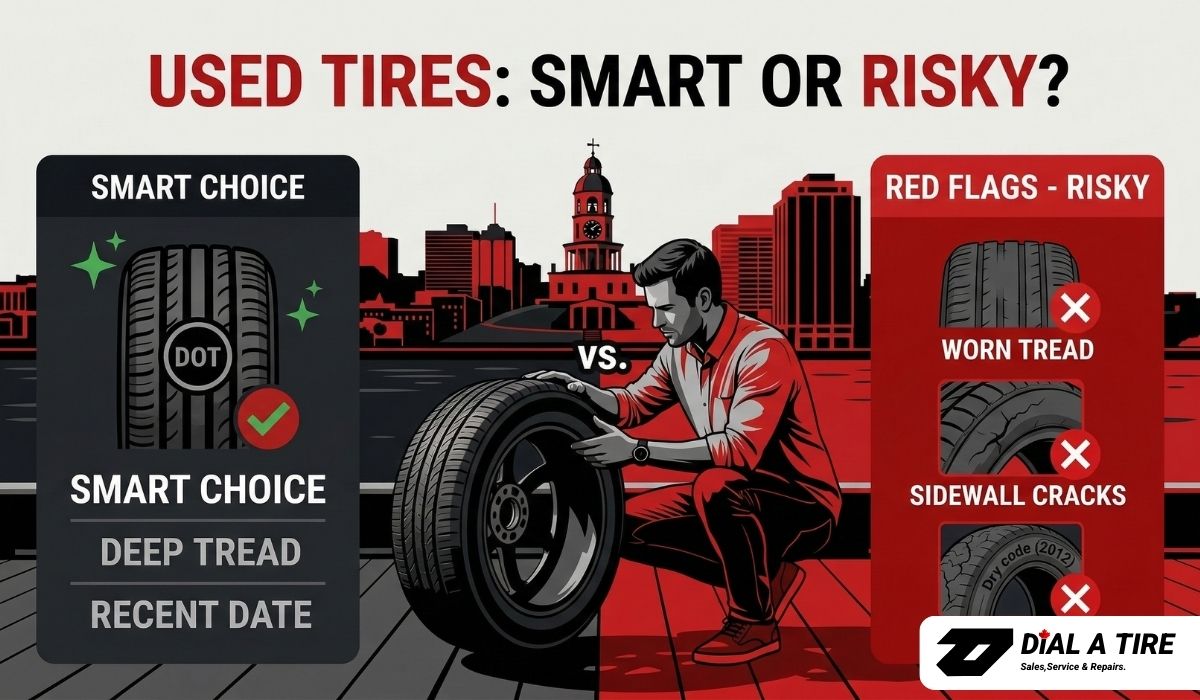
- If tread depth is below 6/32″ (about 4.8 mm) on an all-season tire. You’re buying a tire that’s more than halfway through its life. At $30-40 per tire, you’re paying a significant fraction of a new tire’s cost for a fraction of its remaining life.
- If the tire is more than 5-6 years old. Age degrades rubber regardless of tread depth. A tire with great tread but a 2018 DOT date is a tire that’s already entering the zone where rubber performance declines.
- If you can’t verify the tire’s history. Was it repaired after a sidewall puncture (which is not safe)? Was it run flat and then re-inflated? Was it removed because of a vibration the seller isn’t mentioning? You can’t always know.
- If the price difference between used and budget-new is small. New budget winter tires from brands like Haida, Centara etc. start lower than most people expect. If the gap between a used premium tire and a new budget tire is $30-40 per tire, the new tire almost always makes more sense you get fresh rubber, a known history (none), and the full tread life.
The Red Flags: What To Check Before Buying?
If you’ve decided used tires are the right move, here’s how to evaluate them properly. Do this in person never buy used tires from photos alone.
Red Flag #1: Insufficient Tread Depth
Bring a tread depth gauge or use the coin test. Check multiple points across the face of each tire (inner, centre, outer).
Minimum acceptable for a used purchase:
- All-season tires: at least 5/32″ (about 4 mm) to be worth the money
- Winter tires: at least 6/32″ (about 5 mm) winter tires lose effectiveness faster as they wear
If the seller says “plenty of tread” but won’t let you measure, walk away.
Red Flag #2: Uneven Wear
Run your hand across the tread face. It should feel uniform. If one edge is noticeably smoother or lower than the other, or if you feel a scalloped/wavy pattern, the tire was on a vehicle with alignment or suspension problems.
Why this matters: uneven wear means the internal structure of the tire has been stressed unevenly. Even if the tread depth looks acceptable in the deeper areas, the worn sections compromise both the tire’s performance and its remaining life. You’re not buying a tire with, say, 7/32″ of tread you’re buying a tire with 7/32″ in some spots and 4/32″ in others. The weak spot is what counts.
Red Flag #3: Age (The DOT Date Code)
Check the DOT code on the sidewall the last four digits tell you the week and year of manufacture. If the tire was made in 2019 or earlier, it’s already 6+ years old. That rubber is aging out regardless of how much tread is left.
Our guideline: For a used purchase, we wouldn’t recommend buying anything older than 3-4 years from the manufacture date. You want enough remaining calendar life to make the purchase worthwhile.
Red Flag #4: Sidewall Damage
Inspect the entire sidewall of each tire both inner and outer surfaces. You’re looking for:
- Bulges: Absolutely disqualifying. A sidewall bulge means internal structural failure. The tire is unsafe, no exceptions.
- Cuts or gouges: Surface scuffs from curbing are cosmetic. Anything deep enough that you can see threads or cords means the tire is compromised.
- Cracking: Fine surface cracking is a sign of aging. Heavy cracking, especially near the bead, means the rubber is degraded.
- Previous puncture repairs: Look for patches on the inside (if you can see it) or evidence of plugs in the tread area. A single properly repaired puncture in the tread face is generally acceptable. Multiple repairs, repairs close to the sidewall, or repairs that look sloppy are all reasons to pass.
Red Flag #5: Mismatched Sets
If you’re buying a “set of four,” make sure they’re actually matching same brand, same model, same size, and ideally manufactured within a year of each other. A “set” of four different tires cobbled together from four different sources is not a set it’s four individual tires that happen to be the same size. Mixing brands and models creates inconsistent handling, especially in winter conditions.
Red Flag #6: The Seller Can’t Or Won’t Answer Basic Questions
If you ask “What vehicle were these on?” or “Why are you selling them?” and get vague answers, be cautious. Legitimate sellers usually have a straightforward story: they changed vehicles, upgraded wheel size, or the car was sold. Evasive answers can mean the tires were removed because of a problem the seller isn’t disclosing.
Where To Buy Used Tires In Halifax?
Kijiji and Facebook Marketplace
The largest selection and often the best prices. Also the highest risk you’re dealing directly with individuals and there’s no recourse if the tires turn out to be junk. Do your own thorough inspection before handing over cash.
Used Tire Shops
Halifax has several small operations that buy, inspect, and resell used tires. The advantage: the shop has (presumably) already rejected the worst inventory. The markup is higher than private sale, but you get a basic screening process. Some offer short-term warranties or return policies always ask.
Your Regular Tire Shop
Some shops occasionally have take-off tires from customers who upgraded. These have a known history (we took them off, we know the vehicle, we know why they were removed). Worth asking about, though selection is limited and inconsistent.
The Honest Math: Used vs. New Budget Tires
Let’s say you need four winter tires in a common size like 205/55R16.
- Used premium tires (e.g., Michelin X-Ice Snow with 30-50% tread): ~$50-80 each = $200-320 total. You’ll get maybe 1 or 2 seasons out of them.
- New budget winter tires (e.g., Haida, Centara or similar): ~$70-80 each = $280-320 total. You’ll get 3-4 seasons.
The per-season cost is often very similar and with new tires you get peak performance from day one, a known history, and the confidence that comes with full tread depth for Halifax’s worst conditions.
We’re not telling you used tires are always wrong. But we are saying: run the math before you assume used is the cheaper option. Sometimes it is. Sometimes it’s barely cheaper and significantly riskier.
Bottom Line
Used tires can be a smart, practical solution but only if you know what you’re buying. Check tread depth, check age, inspect for damage, verify they’re a matched set, and run the cost-per-season math against new budget options.
If you’re not comfortable evaluating used tires yourself, bring them by. We’re happy to measure tread, check the DOT date, and give you an honest assessment of whether they’re worth the money.
And if the used option doesn’t pan out, we carry everything from premium Michelin and Bridgestone to value brands like Haida, Sailun, and Centara. There’s a new tire for every budget at Dial-A-Tire and we’d rather set you up right than watch you gamble on rubber that’s past its prime.
Call us or book online we’ll figure out the best option for your vehicle and your budget.
FAQs
Q.1 Is It Safe To Buy Used Tires?
Ans: It can be, if you know what to check. Evaluate tread depth, tire age (DOT date code), condition (bulges, cuts, cracking), and wear uniformity. Avoid tires with sidewall damage, heavy cracking, or less than 5/32″ tread depth for all-seasons or 6/32″ for winter tires.
Q.2 How Old Is Too Old For A Used Tire?
Ans: For a used purchase, we recommend tires no older than 3-4 years from the manufacture date. Older tires have less usable life remaining, and rubber degrades with age regardless of tread depth.
Q.3 Are Used Winter Tires Worth It?
Ans: It depends on the price, condition, and remaining tread. Compare the cost-per-season against new budget winter tires the math often comes out closer than expected, and new tires give you full performance from day one.
Q.4 What’s Better: Used Premium Tires Or New Budget Tires?
Ans: For most Halifax drivers, new budget winter tires (like Haida, Sailun, or Centara) offer better value than used premium tires at 30-50% tread. You get full tread life, a warranty, and peak performance for a similar per-season cost.
Q.5 Where Can I Buy Used Tires In Halifax?
Ans: Kijiji, Facebook Marketplace, used tire shops, and some regular tire shops (including Dial-A-Tire, when take-offs are available). Always inspect tires in person before purchasing never buy from photos alone.
Also Read:
Spring Tire Swap Checklist – What to Inspect After a Harsh Halifax Winter?
Tire Size Guide – Reading the Sidewall & Finding the Right Fit for Any Vehicle in HRM
How to Do a DIY Oil Change in Halifax? – Step by Step Guide for Beginners
Transport Canada’s tire safety regulations set out the minimum tread depth and structural requirements that all tires on Canadian roads must meet — used tires are subject to the same standards as new ones, and a seller has no legal obligation to disclose hidden damage. Tire Rack’s independent testing has consistently found that tread depth alone is a poor predictor of wet-weather stopping distance when rubber has aged and hardened, which is a common problem with used tires of unknown history. Before committing to any used set, it is worth reading our breakdown of winter tires vs all-season tires in Nova Scotia to confirm the used tires you are considering actually suit Halifax driving conditions. If you decide to buy new instead, you can shop tires at Dial A Tire Halifax and have them installed with a proper tire change and mounting service.
Frequently Asked Questions
How do I check if used winter tires are safe to buy in Halifax?
Start with tread depth — 6/32″ or more is the accepted minimum for a winter tire to remain effective in Nova Scotia snow and slush. Beyond depth, inspect the sidewalls for cracking, bulges, or repairs, and check the DOT date code on the sidewall: the last four digits indicate the week and year of manufacture, and tires older than six years carry meaningful age-related risk regardless of appearance.
What hidden problems can used tires have that aren’t visible?
Internal damage from past impacts or overloading can separate the steel belt from the rubber carcass without leaving any mark on the outside. Previous run-flat events — where a tire was driven on while flat — weaken the internal structure permanently. Without a manufacturer’s service record, there is no reliable way to verify a tire’s true history.
Are used winter tires a good deal for Halifax drivers on a budget?
Used tires can look like significant savings up front, but a set with two seasons of usable tread left offers far less long-term value than a new set. Factor in the cost of mounting, balancing, and a Tire Pressure Monitoring System (TPMS) sensor reset — which applies whether tires are new or used — and the gap often narrows considerably.
Is it legal to sell used tires with low tread in Nova Scotia?
Nova Scotia does not have a provincial law that prohibits selling used tires below a specific tread depth, but the buyer assumes full responsibility once the tires leave the seller. Transport Canada’s minimum legal tread depth of 1.6 mm (2/32″) applies to tires in use on public roads, so tires sold with tread near that threshold offer almost no margin before becoming non-compliant.
Updated June 2026.