
We get asked this every year, usually starting in September: “When should I switch to winter tires?”
Some people wait for the first snowflake. Others book the day after Thanksgiving like it’s a family tradition. And every year, we watch the same pattern: half our phone calls in late November are from drivers who meant to call three weeks earlier but “just kept putting it off.”
The truth is, Halifax weather doesn’t follow a clean script. But there is a simple, reliable way to time it that keeps you safer and protects your tires from unnecessary wear.
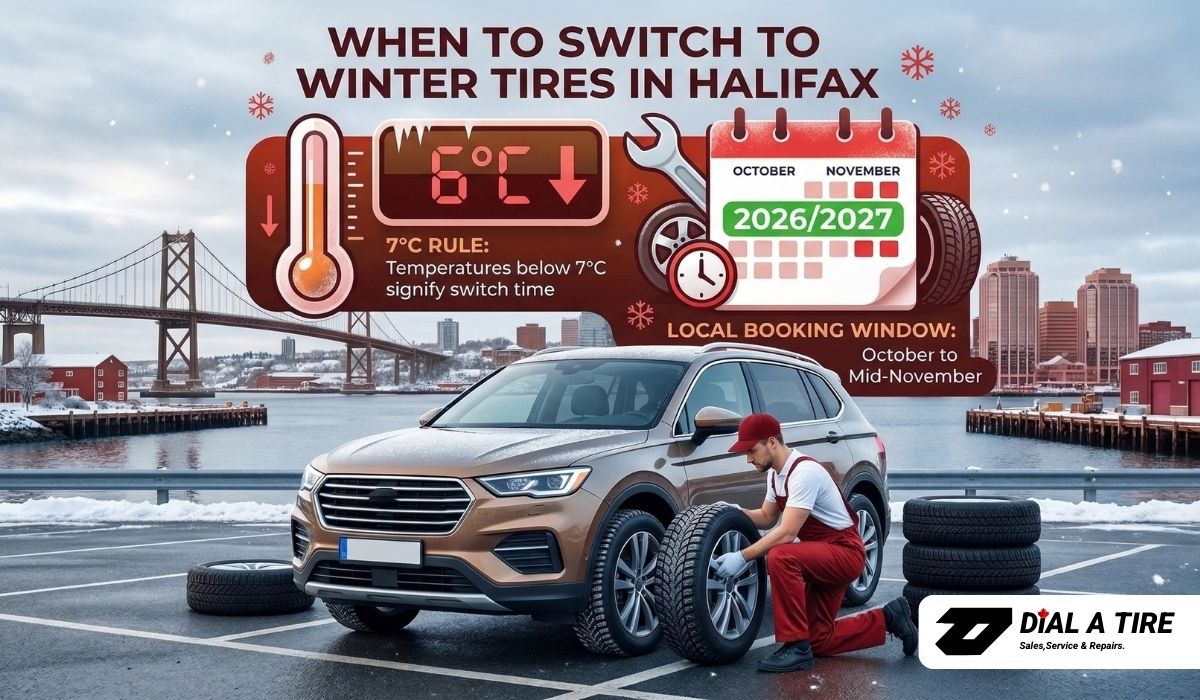
It’s called the 7°C rule, and after 30+ years of swapping tires on Halifax vehicles, it’s the best “no guesswork” approach we’ve found.
The 7°C Rule (And What It Actually Means)
Most people hear “winter tires” and think – Snow! That’s only half the picture.
Winter tires aren’t snow tires, they’re cold-weather tires. The difference matters.
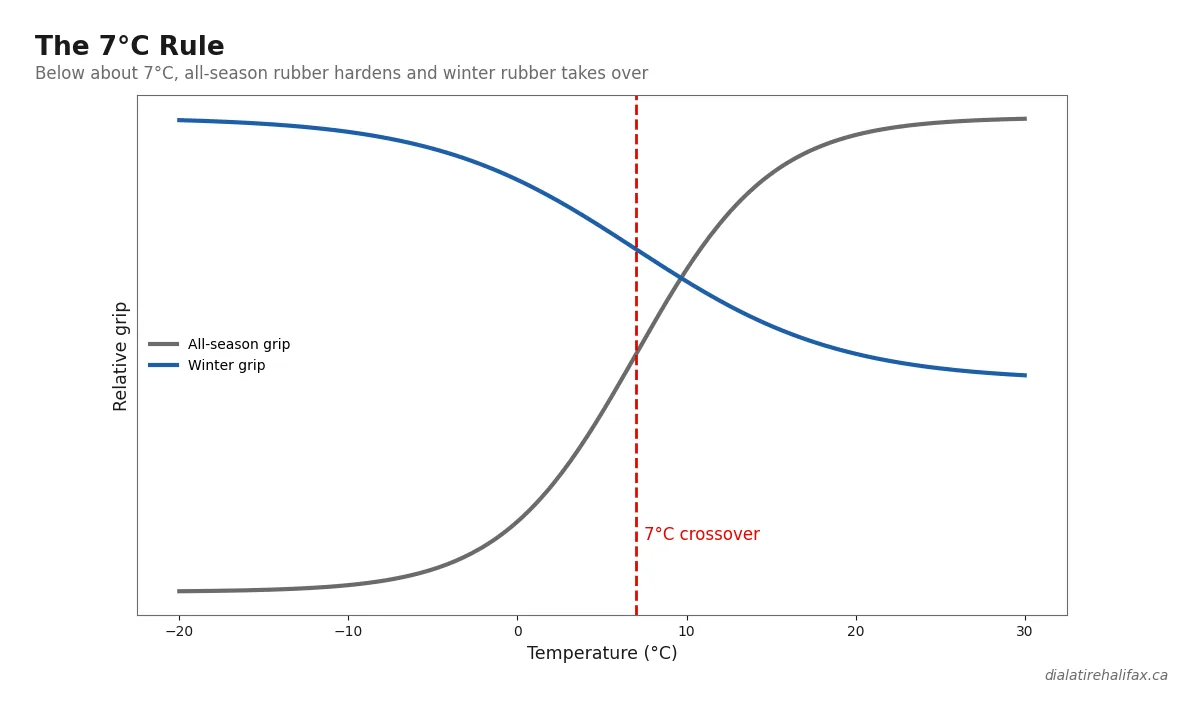
All-season and summer tires are built with a rubber compound that does its best work in warmer temperatures. As the mercury drops, that rubber gets progressively stiffer and stiffer rubber means less grip. Not dramatically less at 10°C, but noticeably less by the time you’re in the single digits. The effect shows up most on cold wet pavement, which is the bread and butter of a Halifax November.
Winter tires use a fundamentally different compound that stays pliable in the cold. They also have thousands of tiny slits in the tread blocks (called sipes) that create extra biting edges on snow and ice. It’s not a marketing gimmick, it’s an engineering difference you can feel the first time you brake hard on a cold, damp road.
The practical rule: When your daily average temperatures are consistently sitting around 7°C or below, winter tires start earning their keep. You don’t need a blizzard. You just need cold
And in Halifax? We typically hit that pattern weeks before anyone sees meaningful snow.
The Halifax Factor: Why Timing Matters More Here Than In Toronto
If you’ve lived in Halifax long enough, you know our winter isn’t really a “snow” winter the way Calgary or Montreal gets snow. Ours is a different animal:
- Cold, wet pavement that looks completely harmless until your back end steps out at an intersection
- Slush pooling in ruts where everyone brakes
- Black ice on the Macdonald and MacKay bridges at 7 AM (bridges freeze before regular road surfaces always)
- Shaded stretches of the Bedford Highway that stay icy well into the afternoon
- Constant freeze-thaw cycles that turn “clear roads” into skating rinks overnight
- Road salt. Lots and lots of road salt.
Here’s a stat that surprises a lot of people: most of the winter-related tire incidents we see at the shop aren’t from massive storms. They’re from that first cold, wet week, the one where it hasn’t technically “snowed” yet, but someone’s commuting at 6:30 AM on stiff all-season tires and discovers the hard way that the Herring Cove Road overpass was icy.
That’s what the 7°C rule protects you from.
So When Should Halifax Drivers Actually Switch?
Forget trying to pick a single magic date. Halifax spring and fall are too unpredictable for that. Instead, watch for a pattern.
For most HRM drivers, the sweet spot is: late October into early-to-mid November.
That’s when you’ll typically see:
- Mornings consistently in the low single digits
- Daytime highs hovering around 7-9°C and not climbing back into the mid-teens
- A 7-day forecast that stays cold not just one chilly morning followed by 14°C afternoons
Who Should Switch Earlier (mid-to-late October)?
- You commute before sunrise. Cold + damp + dark = the trifecta that all-season tires hate.
- You cross the bridges daily. Bridge decks freeze faster than regular pavement because cold air hits them from above and below.
- You drive the Bedford Highway, Prospect Road, or other stretches with shaded hills.
- You do regular highway driving outside HRM the 102 toward Truro or the 103 toward Bridgewater get cold and exposed fast.
- You carry passengers, kids, elderly family. The “I’ll just be more careful” strategy doesn’t hold up when you’re responsible for a carload.
- You run a business vehicle that can’t afford a day off. Downtime is expensive; tires are cheaper.
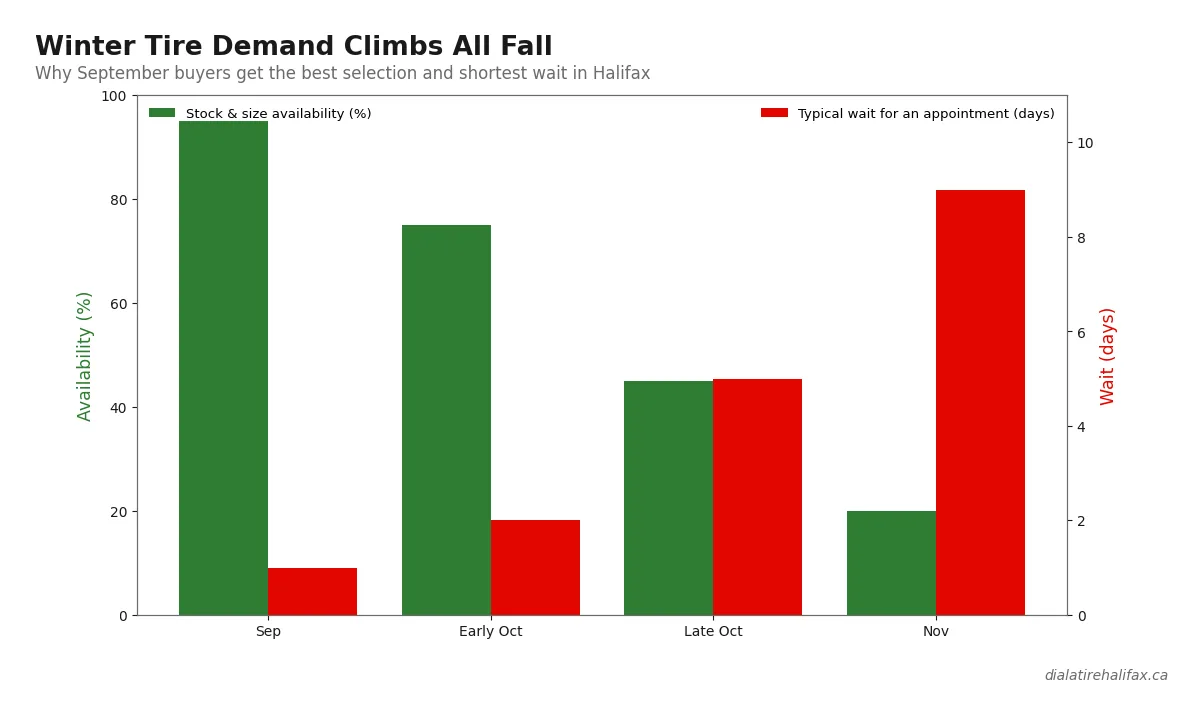
- You’d rather avoid “panic booking week.” Every year, the first major cold snap triggers a flood of bookings. If you wait, you might wait a while.
Who Can Wait A Little Longer?
If you’re retired, drive very low mileage, mostly run midday errands on well-plowed city streets, and genuinely can stay home on bad weather days you have a bit more flexibility. But even then, “waiting for snow” is a gamble.
5 Things To Check Before You Book Your Winter Changeover
Before you call us (or any shop), run through this short list. It saves time and avoids surprises.
1) Look At The 7-Day Forecast Trend Not Today’s Temperature
One warm afternoon doesn’t mean winter is delayed. One cold morning doesn’t mean panic. Look for the pattern. When the weekly trend is sitting around or below 7°C, that’s your cue.
2) Check Your Winter Tire Tread Depth Honestly
Winter tires need more tread than all-seasons to do their job properly. The legal minimum in Nova Scotia is above 1.6 mm (2/32″), but honestly? A winter tire at 4/32″ is legal but has lost most of its winter advantage. We see this a lot when people bring in their “still good” winter tires and the tread depth tells a different story. If your winters are getting thin, this is the year to replace, not the year to squeeze out one more season.
3) Make Sure You Have A Proper Matched Set
Four matching winter tires, same brand, same model, same size, ideally same age. We know people sometimes end up with one mismatched tire after a sidewall blowout or a used tire purchase. Running mismatched tires front-to-back creates unpredictable handling, and in winter conditions, “unpredictable” is the last thing you want.
Think of it this way: you wouldn’t walk on ice with a winter boot on one foot and a sneaker on the other. Same idea.
4) Decide: Studded or Studless?
Yes, we install studded winter tires and they make real sense for certain drivers. But they’re not automatically “better” for everyone.
Studded tires are worth considering if:
- You drive rural or untreated routes regularly
- Your commute includes steep hills or grades
- You’re regularly on the road before the plows and salt trucks
- Black ice is a weekly reality for you, not a rare event
Studless winter tires are usually the better everyday choice if:
- Most of your driving is urban or semi-urban.
- You do a lot of highway driving (studs are noisier at speed)
- You prefer a quieter, smoother ride
- You park in an apartment or condo parkade many buildings don’t allow studded tires because they damage concrete floors
Not sure which makes sense for your route? Call us or stop by. We’ll recommend based on where you actually drive, not a one-size-fits-all answer.
Important reminder: Nova Scotia allows studded tires from October 15 to April 30. Outside that window, they need to come off.
5) Sort Out Your TPMS Plan
If your vehicle has tire pressure monitoring sensors and your winter tires are on separate rims, you’ll want to make sure the TPMS situation is handled whether that means sensors in both sets of wheels or understanding the dashboard light you’ll see all winter.
Quick rule of thumb: if you bought your winter wheel/tire package from a shop that set up TPMS sensors on the winter rims, you’re probably fine. If you’re running aftermarket winter rims without sensors, expect the TPMS warning light to stay on until spring. It’s not dangerous, but it means you should be checking pressure manually through the winter which you should be doing anyway, since cold weather drops tire pressure.
Common Halifax Mistakes (We See These Every Single Year)
Mistake #1: Waiting For Snow
The number one mistake. By the time snow actually hits, every shop in HRM is slammed, and you’ve already spent 2-3 weeks driving on cold pavement with rubber that’s basically turned into hockey pucks. The dangerous period isn’t the blizzard, it’s the weeks leading up to it.
Mistake #2: Installing Winters Too Early
The opposite problem. If you put winter tires on in September while we’re still having 15-18°C days, the soft winter compound wears noticeably faster on warm pavement. Patience works both ways.
Mistake #3: Only Swapping Two Tires
“Can I just put winters on the front?” We hear this more than you’d think. In winter conditions, you want the vehicle to behave predictably. Two winter tires up front and two all-seasons on the rear creates a car that can turn and accelerate but the back end has less grip, which means it can swing out in corners or under braking. This is especially dangerous on rear-wheel-drive vehicles, but it affects front-wheel-drive cars too.
Always four. No exceptions.
Mistake #4: Ignoring The Vibration Or Pull After Installation
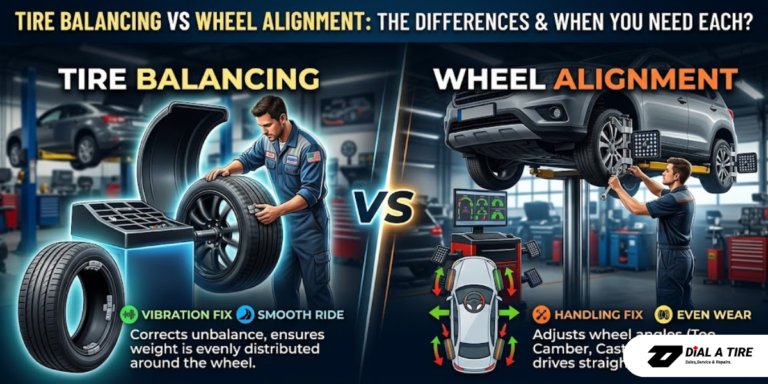
If the car shakes at highway speed or pulls to one side after a tire swap, something is off a wheel that needs rebalancing, a tire that picked up a flat spot in storage, or an alignment issue from a pothole you forgot about. Don’t “live with it.” Halifax potholes are legendary, and a vibration you ignore in November becomes uneven tire wear you pay for in April.
Pro Tip From Dial-A-Tire
If you commute daily on Halifax hilly roads, cross the bridges, or start your drive early in the morning, switch before the first real cold snap, not during it.
There’s a specific feeling when you drive on proper winter tires for the first time each fall. The car just sticks. Intersections that felt sketchy on all-seasons suddenly feel composed. Bridge approaches that make you tense up are just… normal. That’s the compound working. And it works whether there’s snow on the ground or not.
The Bottom Line
Winter tire timing in Halifax isn’t about guessing the first storm. It’s about switching when temperatures consistently drop toward 7°C and booking before the rush makes that impossible.
If you’re not sure when to pull the trigger, tell us your vehicle, your commute, and how you typically drive. We’ll give you straight advice, no pressure, no upselling.
Most winter changeovers at Dial-A-Tire are done in about 20 minutes fast, but never rushed. Call us or book online and we’ll get you winter-ready.
FAQs
Q.1 When Should I Switch To Winter Tires In Halifax?
Ans: When daily average temperatures are consistently around 7°C or lower typically late October into early-to-mid November for most HRM drivers. Don’t wait for snow; the dangerous period is cold, wet pavement before the first real storm.
Q.2 Is It Bad To Put Winter Tires On Too Early?
Ans: If temperatures are still consistently above 12-15°C, the softer winter compound will wear faster than necessary on warm pavement. Late October is usually early enough for Halifax.
Q.3 Can I Just Put Winter Tires On The Front Wheels?
Ans: We strongly advise against it. Running mismatched tires front-to-back creates unpredictable handling the rear can swing out in corners or under braking. Always install four matching winter tires.
Q.4 Studded Or Studless For Halifax?
Ans: For most urban Halifax drivers, a quality studless winter tire is the better everyday choice effective, quieter, and allowed in all parking garages. Studded tires make more sense for rural routes, steep hills, or drivers who are regularly on the road before the plows. Nova Scotia allows studs from October 15 to April 30.
Q.5 How Long Does A Winter Tire Changeover Take?
Ans: At Dial-A-Tire Halifax, most changeovers take about 20 minutes. If we spot a balancing issue, a worn tire, or something else that needs attention, we’ll let you know before proceeding.
Q.6 What Does A Winter Tire Changeover Cost In Halifax?
Ans: Cost depends on whether your winter tires are already mounted on rims (a simple swap) or need to be mounted and balanced on your existing wheels. Call us with your vehicle details and we’ll give you a clear quote no hidden fees.
Also Read:
How To Store Winter Tires In Nova Scotia? Halifax Tire Storage Guide
When to Take Off Winter Tires in Halifax? – The Spring Timing Guide
Spring Tire Swap Checklist – What to Inspect After a Harsh Halifax Winter?
Frequently Asked Questions: When to Switch to Winter Tires in Halifax
When exactly should I switch to winter tires in Halifax?
Switch when your daily temperatures are consistently sitting around 7°C or below — not just one cold morning, but a sustained pattern. For most Halifax drivers that window falls in late October to early November. If you commute before sunrise, cross the bridges daily, or drive the Bedford Highway, move that target to mid-to-late October. The 7°C rule matters because all-season rubber begins stiffening below that point, reducing grip on cold, wet pavement whether or not there is any snow.
Do I really need winter tires if it hasn’t snowed yet?
Yes — and this is the most common misconception we hear. Winter tires are cold-weather tires, not snow tires. Their compound stays pliable below 7°C, giving you better braking and cornering on cold, damp pavement long before the first flake falls. The accidents we see most often at the shop aren’t from blizzards; they’re from that first cold, wet week when roads look fine but aren’t. Waiting for snow means your all-seasons are already working against you.
What is the best time to book a winter tire changeover in Halifax?
Book in October — ideally the first two weeks. Every year the first hard cold snap in late October or early November triggers a surge of calls and our availability tightens fast. Booking early means you pick your time, your tires are inspected calmly, and you aren’t rushed. If the weather stays mild longer than expected, it’s straightforward to push an appointment back a week.
Will switching to winter tires early wear them out faster?
Only if temperatures are warm. Winter tire compound is softer than all-season compound and wears faster on warm, dry asphalt. However, switching when temperatures are consistently around 7°C or below — which is exactly when we recommend it — means the compound is operating in its designed temperature range. You are not accelerating wear; you are keeping the right tire on the road for the conditions.
What should I check before my winter tire changeover appointment?
Run through five quick items: check the 7-day forecast trend (not just today); look at your current tire tread depth with a toonie — the silver band should be covered; inspect sidewalls for cracks or bulges; confirm your winter set is where you expect it to be; and note any pulling, vibration, or steering concerns so the technician can check alignment and balance at the same time. Catching these before the appointment saves a follow-up trip.

Great advice on switching tires before the weather turns too harsh! The 7°C rule is simple and definitely helps me plan better. I’ll be booking my appointment earlier this year.