
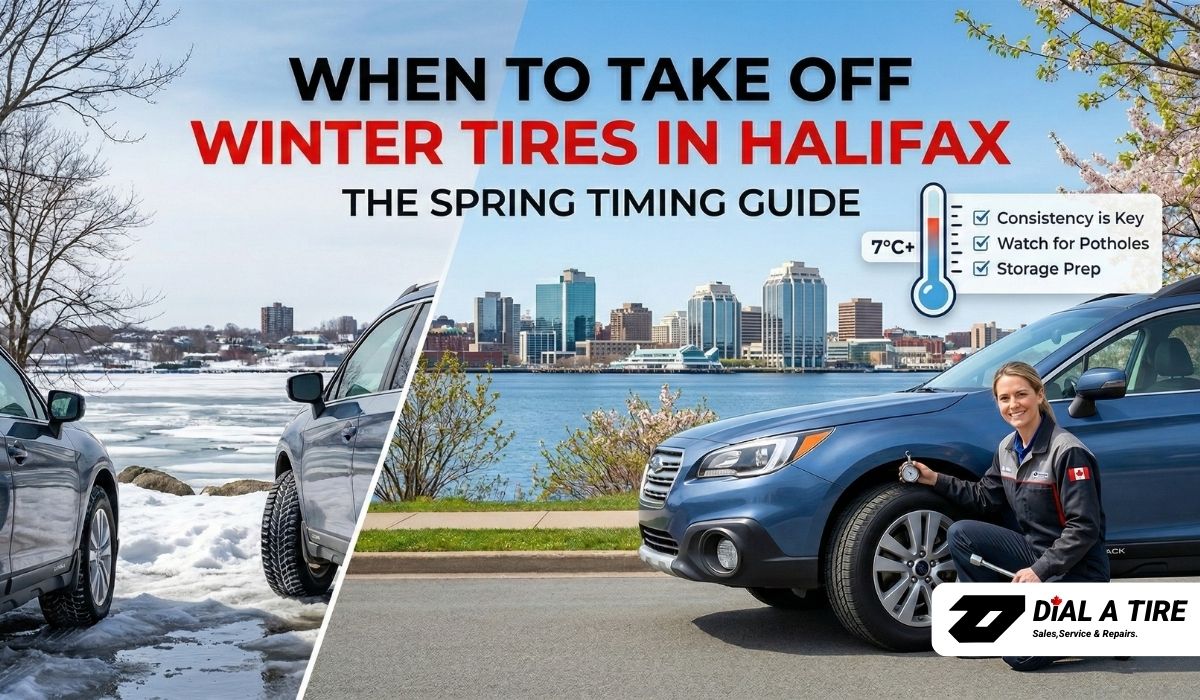
Every spring, the same conversation: “How long should I keep my winter tires on?”
Some people switch back to the first warm weekend in March because they’re tired of the noise. Others leave their winters on until June “just in case we get one more storm.” We had a customer last year who came in mid-July! still rolling on winter rubber because “I just never got around to it.”
Both extremes cost you. Switch too early and you lose traction during Halifax’s unpredictable late-season cold snaps. Switch too late and you’re grinding down expensive winter tread on warm pavement for no benefit.
Here’s how we think about it, and the guide we’ve used in our shop for years.
The “Reverse 7°C Rule”
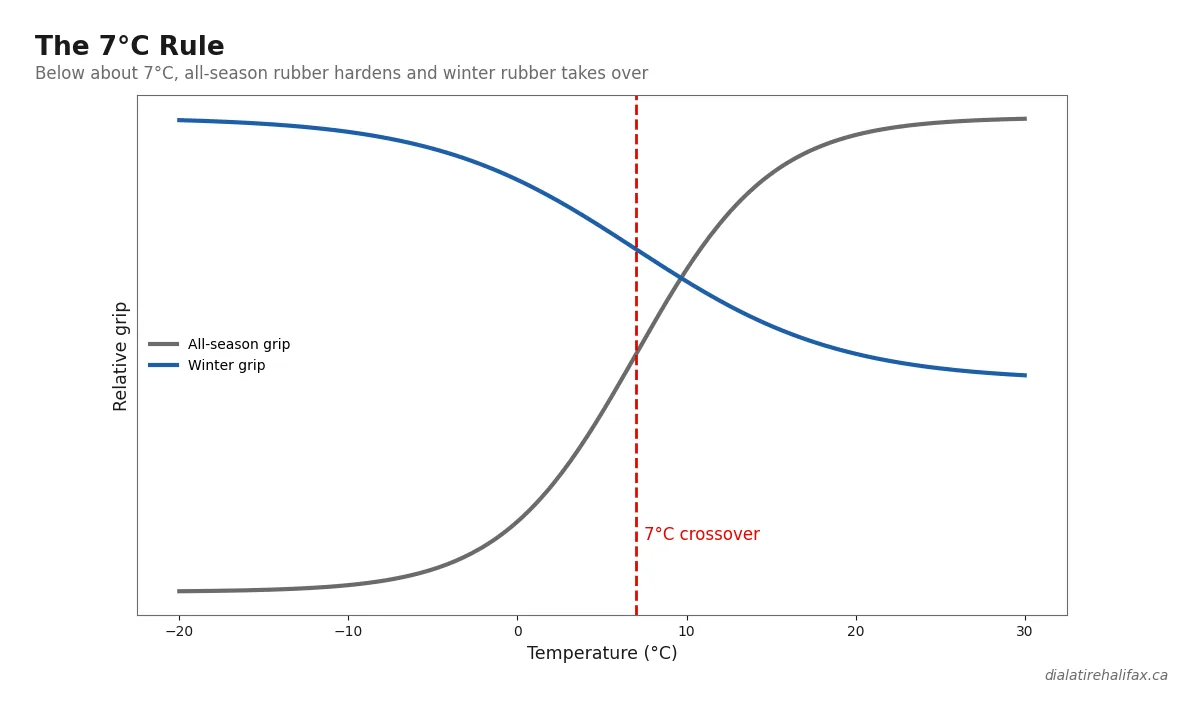
You probably know the fall version: switch to winter tires when temperatures consistently hover around 7°C or below. Spring is the other side of that equation.
When daily temperatures are consistently above ~7°C, the rubber compound in winter tires becomes too soft for the conditions. Winter tires are engineered to stay pliable in colds, that’s their superpower. But on warm pavement, “pliable” becomes “mushy.” The result:
- Faster tread wear. This is the big one. That soft compound scuffs away on warm, dry asphalt at a rate that would make you wince if you could see it in fast-forward. Every warm week you leave them on is the tread depth you’re donating to the pavement.
- More road noise. The aggressive tread pattern that channels slush and bites ice also creates more noise on dry roads. If your car sounds louder than usual at highway speeds, this is why.
- Squishier handling. Steering feels vague, turn-in feels lazy, the car feels like it’s riding on marshmallows. That’s not a problem, it’s the soft compound doing exactly what it was designed to do, just on the wrong surface.
- Longer dry braking distance. This surprises people. In warm, dry conditions, a proper all-season or summer tire will actually stop shorter than a winter tire because the harder compound maintains better contact with warm pavement. Winter tires on hot asphalt is a bit like running on a basketball court in ski boots, technically possible, but you’re working against the design.
Typical Spring Timing In Halifax
Halifax spring is nothing if not inconsistent. We’ve had snow in May and we’ve had 15°C days in March. So the same advice applies as in fall: watch the pattern, not any single day.
Look for:
- A full week of daily averages sitting above 7°C
- No ice or snow in the 7-day forecast
- Roads that are mostly dry the salt is gone, the puddles are shrinking, the frost is off the windshield in the morning
- Overnight lows staying above freezing or close to it
For most Halifax drivers, this window falls in late April to early May.
Some years it’s earlier. Some years a cold snap in late April makes you glad you waited. The point is: don’t make the decision based on one sunny Saturday. Give it a week.
The “I’ll Wait For My Appointment” Trap
Here’s what happens every year: mid-April hits, everyone realizes they need their tires swapped, and every shop in HRM books up fast. If you wait until the perfect weather day to call, you might be driving on winter tires for another 2-3 weeks while you wait for a slot.
Our suggestion: Book your spring changeover appointment in advance even in early April for a date in the late April window. If an unexpected cold snap hits, it’s easy to push back. But if spring arrives on schedule, you’ll be glad you didn’t have to wait.
What Happens If You Leave Winter Tires On Too Long? (Real Numbers)
We’re not just talking about vague “wear.” Here’s what we actually observe in the shop:
A winter tire that should give you 3-4 solid winter seasons will lose a season’s worth of tread life for every 2-3 months of unnecessary warm-weather driving. That customer who came in mid-July? His winter tires which were practically new in October had the tread depth of tires halfway through their life. He burned through roughly $300-$400 worth of tread on spring and summer roads.
The opposite problem is less common but equally real: we’ve seen people switch to all-seasons on the first warm day in March, then scramble to come back when Halifax drops to -5°C for a week in April. That second trip to the shop costs time, money, and frustration.
Clear Signs It’s Time To Switch Back
If you’re on the fence, these are the signals that spring has genuinely arrived and your winter tires have served their purpose:
- Daytime highs are consistently in double digits. Not just one warm afternoon, a sustained pattern of 7°C+ days.
- Your car is noticeably louder at highway speed. That’s the aggressive winter tread singing on dry pavement.
- Steering feels lazy or vague. Especially noticeable in turns and lane changes the car doesn’t feel as crisp or responsive.
- You’re driving on dry pavement 90% of the time. Slush is gone, salt is washed away, roads are just… roads again.
- No cold snaps showing in the forecast. Check the 10-day. If it’s clear of any sub-zero surprises, you’re good.
Halifax Potholes – Why Is Spring Secretly Alignment Season?
Here’s a Halifax truth that nobody warns newcomers about: potholes multiply right after winter.
The freeze-thaw cycle that defines our winter is brutal on asphalt. Water seeps into cracks, freezes, expands, thaws, and repeats all winter long. By March and April, the roads are pockmarked with craters that weren’t there in November. And the worst ones often appear on the exact routes you drive every day, except now they’re hidden under a thin puddle.
If you notice any of these after your spring changeover or even before it:
- The car pulls to the left or right during straight-line driving
- Vibration at highway speed that wasn’t there before
- The steering wheel sits off-centre even though you’re driving straight
- A new uneven wear pattern starting on any tire
DON’T ignore it! It’s almost certainly an alignment issue, and Halifax potholes are the usual suspect. A wheel alignment is one of the cheaper things you can do at a shop, and ignoring a misalignment will eat through a brand-new set of all-season tires in one summer.
This is especially important to check before storing your winter tires. If your car has been out of alignment all winter, your winter tires have been wearing unevenly the entire time. Throwing them back on next October without checking alignment first means you’ll continue the same uneven wear pattern and shorten their life significantly.
What To Inspect During A Spring Changeover? (What “Good” Looks Like)
A proper spring changeover isn’t just “take these off, put those on, see you in October.” A shop that’s doing it right will cover:
On the winter tires coming off:
- Tread depth measurement so you know exactly where they stand for next season
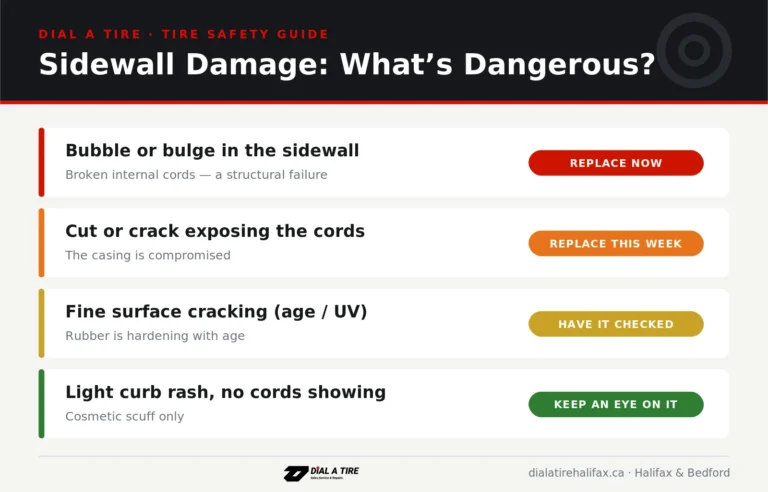
- Visual inspection for cuts, cracks, bulges, or embedded objects (nails, screws)
- Note any uneven wear that suggests alignment or suspension issues
On the all-season/summer tires going on:
- Same condition check tires that sat in storage for 6 months deserve a look before they go on the car
- Correct inflation pressure tires lose pressure sitting in storage, and spring temperatures affect PSI
- Proper torque on every lug nut (not “close enough with an impact gun” actual torque spec)
- Rebalancing if you’re mounting tires onto wheels (not needed if you have a dedicated set of rims for each season)
- TPMS sensor check make sure the system reads correctly once the summer wheels are on
On the car:
- Quick look at brakes (the wheels are off anyway it takes 30 seconds to peek at the pads and rotors)
- Check for any obvious pothole damage bent rims, torn CV boots, leaking shocks
That might sound like a lot, but in practice it adds just a few minutes to the appointment. It’s the difference between “swap and pray” and “swap and know.”
Storing Your Winter Tires Properly (Because The October You Will Thank The April You!)
If you’re taking your winters off, how you store them matters for next season:
- Clean them first. Rinse off the salt and road grime. Salt left on rubber and rims all summer accelerates degradation and promotes rust on steel rims.
- Store them in a cool, dry place away from direct sunlight. A basement or inside corner of a garage works. A hot shed or next to a window does not UV light and heat break down rubber compounds.
- If they’re on rims, stack them flat (one on top of the other) or hang them from rim hooks. If they’re off rims, store them upright (standing up) and rotate their position every month or two to prevent flat-spotting.
- Don’t store them in plastic bags unless the bags are sealed and you’ve removed excess air. Condensation inside the bag is not great for the rubber.
Some shops including ours offer seasonal tire storage if you don’t have the space. Worth asking about!
Pro Tip From Dial-A-Tire
If your winter tires came off showing uneven wear more worn on the inside edge, or a scalloped/cupped pattern don’t just throw them back on next fall and hope for the best. That wear pattern is your car telling you something is off, usually alignment or a worn suspension component.
Get it diagnosed and fixed now, before your fresh all-season tires start wearing the same way all summer. Uneven tire wear is one of the most expensive “small” problems a car can have, because it ruins tires slowly enough that you don’t notice until it’s too late.
Winter tires are too expensive to sacrifice to a problem that a $100 alignment could fix.
Bottom Line
Spring tire timing in Halifax is the mirror of fall: watch for temperatures consistently above 7°C, give it a week to be sure, and book your appointment before the late-April rush fills every shop in town.
Switch too early and a late cold snap catches you exposed. Switch too late and you’re grinding away expensive winter tread for nothing. The sweet spot for most Halifax drivers is late April into early May but every year is a little different, so watch the forecast, not the calendar.
Most spring changeovers at Dial-A-Tire are done in about 20 minutes fast, but never rushed. Call us or book online and we’ll get you spring-ready with a proper inspection included.
FAQs
Q.1 When Should I Take Off Winter Tires In Halifax?
Ans: When daily average temperatures are consistently above 7°C typically late April to early May for Halifax. Watch the weekly pattern, not one warm day. Switching too early risks a late cold snap; switching too late burns through winter tread on warm pavement.
Q.2 What Happens If I Leave Winter Tires On In Summer?
Ans: The soft winter compound wears much faster on warm pavement; you can lose a full season’s worth of tread life in just 2-3 months of unnecessary summer driving. You’ll also notice more road noise, vaguer steering, and longer braking distances on dry roads.
Q.3 Can A Late-April Snowstorm Catch Me Without Winter Tires?
Ans: It’s possible Halifax weather is unpredictable. That’s why we recommend watching the 7-10 day forecast trend rather than switching on the first warm day. If you see a consistent warm pattern with no cold snaps ahead, you’re safe to swap.
Q.4 Should I Get An Alignment Check When I Swap Tires In Spring?
Ans: Yes, especially after a Halifax winter. Freeze-thaw potholes are brutal on alignment. If you notice pulling, vibration, or uneven tire wear, an alignment check is a smart investment that protects your new set of tires all summer.
Q.5 How Should I Store Winter Tires Over The Summer?
Ans: Clean off salt and road grime, then store in a cool, dry place away from direct sunlight. If they’re on rims, stack flat or hang from hooks. If off rims, store standing upright. Avoid hot sheds and plastic bags with trapped moisture.
Q.6 How Long Does A Spring Tire Changeover Take?
Ans: At Dial-A-Tire Halifax, most spring changeovers take about 20 minutes including a condition check of both sets of tires. If we spot an issue that needs attention, we’ll let you know before proceeding.
Frequently Asked Questions: When to Take Off Winter Tires in Halifax
When should I take my winter tires off in Halifax?
Remove winter tires when daily temperatures are consistently above 7°C — not just one warm Saturday, but a sustained pattern lasting at least a week with no sub-zero nights in the 10-day forecast. For most Halifax drivers, that window falls in late April to early May. Some years it arrives earlier; some years a cold snap in late April makes you glad you waited. Watch the pattern, not a single warm afternoon.
What happens if I leave winter tires on too long in the spring?
Winter tire compound is engineered to stay soft in the cold. On warm, dry asphalt it works against you: tread wears significantly faster, road noise increases (the aggressive siping is loud on dry pavement), steering feels vague and less responsive, and dry braking distance actually lengthens because soft compound doesn’t maintain as firm a contact with warm pavement as a harder all-season or summer compound does. Every warm week you leave winters on is tread depth you’re burning for no safety benefit.
Is it safe to switch back to all-seasons in late March in Halifax?
Usually not. Halifax is notorious for cold snaps in late March and into April. We’ve seen snow in May. If temperatures are still dipping below 7°C overnight, or if there’s any chance of a late frost on the 10-day forecast, leave the winters on. One unexpected cold morning on stiffened all-season tires costs more — in risk and potentially in repair bills — than a few extra weeks of winter rubber. When in doubt, wait for the sustained warm pattern.
Should I book my spring tire changeover in advance?
Yes — book in early April for a late April appointment. Every year the same pattern plays out: spring arrives, everyone calls at once, and shops book up quickly. If you wait for the “perfect day” to call, you could end up driving on winter tires for two or three weeks after you’re ready to switch, burning unnecessary tread. Booking ahead means you stay in control of the timing, and it’s easy to push back a week if a cold snap arrives.
Do all-weather tires need to be swapped in the spring?
No — that is one of the main conveniences of all-weather tires. Tires carrying the 3-Peak Mountain Snowflake (3PMSF) symbol are designed to stay on year-round, so there is no seasonal changeover required. Keep in mind that all-weather tires are a compromise: they are more capable than all-seasons in winter conditions, but they wear faster in warm weather than a dedicated summer or all-season tire. If you run all-weather tires, check tread depth each spring and watch for the wear indicators.


It’s funny how every year, there’s that ‘one last storm’ that keeps us from switching off winter tires. But it’s true, keeping them on too long can really shorten their lifespan. I’ll make sure to pay closer attention to those temps!