You’re shopping for tires and you see something like this:
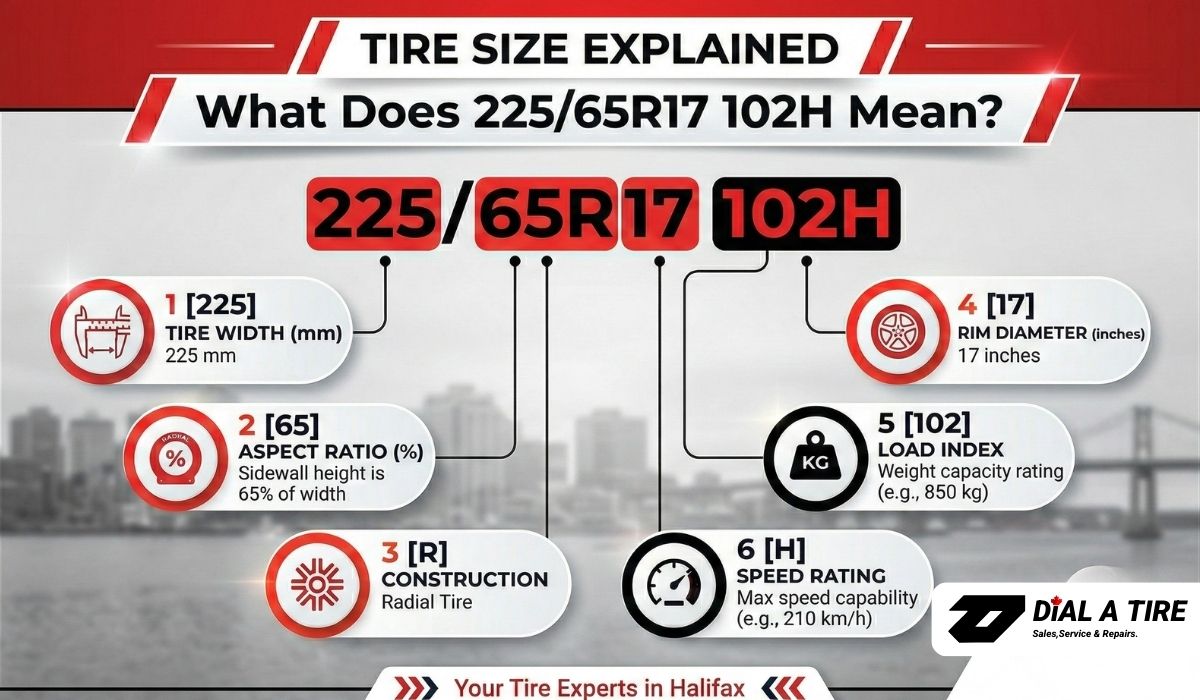
225/65R17 102H
If that looks like a random string of numbers and letters, you’re not alone. Most people have no idea what any of it means, and honestly, you don’t need to memorize the whole system. But understanding the basics saves you from buying the wrong size, getting talked into something you don’t need, or ending up with tires that technically fit but aren’t right for your vehicle.
Here’s the decoder ring in plain English, no engineering degree required.
Breaking Down the Tire Size: 225/65R17 102H
Let’s take that number string apart, piece by piece.
225 Section Width (in millimetres)
This is the width of the tire from sidewall to sidewall, measured in millimetres. A 225 tire is 225 mm wide roughly 8.9 inches.
Wider tires generally provide more contact with the road (better grip in dry conditions). Narrower tires can be better in snow because they concentrate the vehicle’s weight into a smaller patch, which helps the tire cut through snow rather than float on top of it.
What it means for you: Unless you’re intentionally upsizing or downsizing, sticking with the width your vehicle was designed for is an easy choice. It’s printed on the door jamb sticker.
65 Aspect Ratio (the Sidewall Height)
This number is a percentage. It means the sidewall height is 65% of the section width. So on a 225/65 tire, the sidewall is approximately 146 mm tall (225 × 0.65).
Lower aspect ratio (like 45 or 50) = shorter, stiffer sidewall = sportier feel, less cushion, more responsive steering. You see these on performance cars.
Higher aspect ratio (like 65 or 70) = taller sidewall = more cushion, better pothole absorption, softer ride. Common on SUVs and trucks.
What it means for you: Changing the aspect ratio changes the overall diameter of the tire, which affects speedometer accuracy, ride height, and clearance. Don’t change it unless you know what you’re doing (or ask us we’ll calculate the right combo).
R Construction Type
R stands for radial construction, which is how virtually all modern passenger tires are built. The internal plies run radially (from bead to bead, perpendicular to the tread). You’ll almost never see anything other than R on a passenger vehicle tire.
If you see a “D” (diagonal/bias-ply), that’s a different and older construction type occasionally found on trailers or specialty vehicles. Not relevant for most Halifax drivers.
17 Rim Diameter (in inches)
This is the diameter of the wheel the tire is designed to fit. A 17″ tire goes on a 17″ rim. Period.
This number must match exactly. A 16″ tire will not mount on a 17″ rim (and no reputable shop would try). If you’re buying a separate set of winter rims in a different size (like going from 17″ alloys to 16″ steel for winter), the tire size changes too the overall diameter should stay approximately the same. (When in doubt, ask us we’ll calculate it!)
102 Load Index
This number indicates the maximum weight the tire can support when properly inflated. A load index of 102 means that each tire can carry up to 850 kg (1,874 lbs).
You don’t need to memorize load index tables. The key rule: never install a tire with a lower load index than what the vehicle manufacturer specifies. Your vehicle was engineered for a specific load rating, and going below it means the tires could be overstressed especially on trucks, SUVs, or vehicles that carry heavy loads.
H Speed Rating
The letter at the end indicates the maximum sustained speed the tire is rated for. H = 210 km/h. Other common ratings:
- T = 190 km/h (factory rating on many passenger vehicles)
- H = 210 km/h (common on most passenger vehicles)
- V = 240 km/h (sport sedans, performance vehicles)
- W = 270 km/h (high-performance)
- Q = 160 km/h (common on winter tires acceptable because winter speeds are lower)
For winter tires specifically: It’s common and acceptable to use a tire with a lower speed rating than your summer/all-season tires as long as you drive within that speed rating. A Q-rated winter tire is fine for Canadian winter driving conditions; you’re not doing 210 km/h in January anyway.
General rule: Match or exceed the original equipment speed rating for summer/all-season tires. For winter tires, you can go lower but shouldn’t go lower than Q without understanding the implications.
Where to Find Your Correct Tire Size?
Three reliable sources, in order of priority:
1. Driver’s Door Jamb Sticker
Open the driver’s door and look for the sticker on the door frame or the edge of the door itself. This is the vehicle manufacturer’s specified tire size, inflation pressure, and load information. It’s specific to your exact vehicle, trim level, and factory wheel configuration.
This is the gold standard. Start here.
2. Owner’s Manual
Same information, usually in the “specifications” or “maintenance” section. Also lists approved alternative sizes if applicable.
3. The Tires Currently on the Car
Read the sidewall of what’s already installed. But and this is important there’s no guarantee the current tires are the correct size. Previous owners may have installed the wrong size, or a tire shop may have substituted a close-but-not-exact size. Always cross-reference with the door sticker.
Common Questions we Get at the Shop
“Can I put a different size tire on my car?”
Sometimes, with caution. The overall diameter (the full height from ground to top of the tire) should stay within about 5% of the original. Going beyond that can affect:
- Speedometer accuracy (your speedo reads faster or slower than reality)
- ABS and traction control calibration
- Ride height and ground clearance
- Warranty considerations
A different width is sometimes possible too, but requires the right rim width to support it. Wider doesn’t always mean better in snow, narrower can actually perform better.
Bottom line: If you’re considering a size change, ask before you buy. We’ll tell you what works and what doesn’t for your specific vehicle.
“My winter tires are a different size than my summer tires is that okay?”
Often, yes. Many drivers run a smaller rim for winter (e.g., 16″ steel rims instead of 17″ alloys) with a correspondingly different tire size that maintains approximately the same overall diameter. This is a very common and perfectly valid strategy smaller rims are cheaper, the taller tire sidewall absorbs potholes better, and the narrower tire can actually be better in snow.
The key is that the overall rolling diameter stays close to original. We calculate this for customers regularly it takes about 60 seconds.
“Do I need to replace all four tires at the same time?”
Ideally, yes. On AWD vehicles, mismatched tire diameters (even small differences from unequal wear) can strain the drivetrain. On FWD and RWD vehicles, replacing in pairs (same axle) is acceptable, but four matching tires is always the best practice.
If you do replace in pairs, put the new tires on the rear axle regardless of whether the car is FWD or RWD. Newer tires on the rear provide better stability and reduce the risk of oversteer (the rear end swinging out) in wet or slippery conditions.
Extra Letters and Symbols you Might See
- XL or Extra Load: The tire is reinforced for higher load capacity. Common on EV (Electric vehicles), SUVs and trucks, and sometimes specified for vehicles with heavy factory options.
- M+S (Mud and Snow): A basic designation that the tread pattern is intended for light mud and snow use. Does not mean the tire is winter-rated.
- Three-peak mountain snowflake symbol: This means the tire has passed standardized severe-snow traction testing. This is the mark to look for on actual winter and all-weather tires.
- OE or a manufacturer logo (like a star for BMW, N-spec for Porsche, MO for Mercedes, AO for Audi, etc.): The tire was made to the vehicle manufacturer’s specific specifications. Usually means the compound or construction is (very) slightly different from the “regular” version of the same tire model.
The Easy Version
If all of this feels like more than you need to know, here’s the shortcut:
- Open your driver’s door and read the sticker.
- Write down the tire size (e.g., 225/65R17 102H).
- Tell us that number when you call or visit.
- We’ll match it with the correct tire options for your vehicle, driving style, and budget.
That’s genuinely all you need to do. We handle the rest fitment, load rating, speed rating, all of it.
Most tire consultations at Dial-A-Tire take just a few minutes, and many installations are done in about 30 minutes fast, but never rushed. Call us or book online and we’ll find the right fit.
FAQs
Q.1 What Do The Numbers On My Tire Mean?
Ans: The format (e.g., 225/65R17 102H) indicates section width in mm (225), aspect ratio as a percentage (65), construction type (R for radial), rim diameter in inches (17), load index (102), and speed rating (H). Your vehicle’s correct size is listed on the driver’s door jamb sticker.
Q.2 Can I Put A Different Size Tire On My Car?
Ans: Sometimes, but the overall diameter should stay within about 5% of the original to avoid affecting your speedometer, ABS calibration, and ride height. Ask your tire shop before buying.
Q.3 Do Winter Tires Have To Be The Same Size As Summer Tires?
Ans: Not necessarily. Many drivers use a smaller rim diameter for winter with a correspondingly different tire size that maintains the same overall rolling diameter. This is common and perfectly acceptable.
Q.4 What Does The Three-Peak Mountain Snowflake Symbol Mean?
Ans: It means the tire has passed standardized severe-snow traction testing and is rated for winter use. This is the symbol to look for on winter and all-weather tires the M+S marking alone is not a winter rating.
Q.5 Should I Replace All Four Tires At Once?
Ans: Ideally, yes especially on AWD vehicles. If replacing in pairs, put the new tires on the rear axle for better stability. Four matching tires is always best for even handling.
For the authoritative rules on how tire sizes, load indices, and speed ratings are standardized for Canadian roads, the Transport Canada tire safety guidelines lay out exactly what each marking must communicate. The Tire and Rubber Association of Canada also publishes practical guidance on matching the correct tire to your vehicle’s specification — see the TRAC tire basics resource for a plain-language breakdown. If you’re ready to shop by size or need help confirming what fits your vehicle, browse our tire inventory or book an appointment and we’ll pull the right match for your make and model. After swapping to the correct size, tire balancing and wheel alignment are the natural next step to ensure your new tires wear evenly from day one.
Frequently Asked Questions
What does the 225/65R17 on my tire sidewall actually mean?
Each number is a separate measurement. The first number (225) is the tire’s section width in millimetres — how wide the tire is from sidewall to sidewall. The second number (65) is the aspect ratio — the sidewall height expressed as a percentage of the width, so a 65 here means the sidewall is 65% of 225 mm tall. The “R” stands for radial construction, which is the standard for virtually every passenger vehicle sold today. The final number (17) is the wheel diameter in inches that the tire is designed to fit.
What does the load index and speed rating mean — like “102H”?
The load index (102) refers to the maximum weight each tire can safely carry when properly inflated. A load index of 102 equals roughly 850 kg per tire — cross-reference the full chart in your owner’s manual or ask us to confirm your vehicle’s requirement. The speed rating letter (H) indicates the maximum sustained speed the tire is certified for — H is rated to 210 km/h under ideal conditions. Never install a tire with a lower load index or speed rating than your vehicle manufacturer specifies; doing so can void insurance and compromise safety.
Can I put a different tire size on my car as long as the wheel fits?
Not without checking first. The overall diameter of the tire must stay within about one to two percent of the original equipment size or your speedometer, odometer, and stability control calibrations go off. Wider tires can also rub wheel wells, especially on lock-to-lock turns. The safest approach is to use a plus-sizing guide or have a technician verify compatibility before purchasing. Our team can confirm fitment against your vehicle’s specifications — search our inventory by vehicle to see only confirmed fits.
Do I need the same size on all four tires, or can I mix?
On most vehicles you should run matched sizes across an axle at minimum, and ideally all four. Mismatched diameters on an all-wheel-drive (AWD) or four-wheel-drive (4WD) vehicle can stress the centre differential and transfer case — sometimes causing expensive drivetrain damage. Even on a front-wheel-drive car, mixing a noticeably different size front-to-back affects handling balance and can confuse electronic stability systems. If one tire is damaged beyond repair, the remaining three tread depth should be measured; if worn significantly, replacing the pair on that axle is usually the right call.
Updated June 2026.